 My child is in daycare, and it seems like she’s always sick!
We hear this a lot from stressed-out parents worried about the toll frequent colds and other viruses can take on kids and families. And while the daycare experience has plenty of upsides, like cooperation, socialization, and language development, studies show that kids in childcare settings do get sick more frequently, especially in the toddler and preschool years. The good news is, things even out as your child gets older and builds immunity. But how can parents keep their children as healthy as possible in those vulnerable early years?
Why Do Children In Daycare Get Sick More Often?
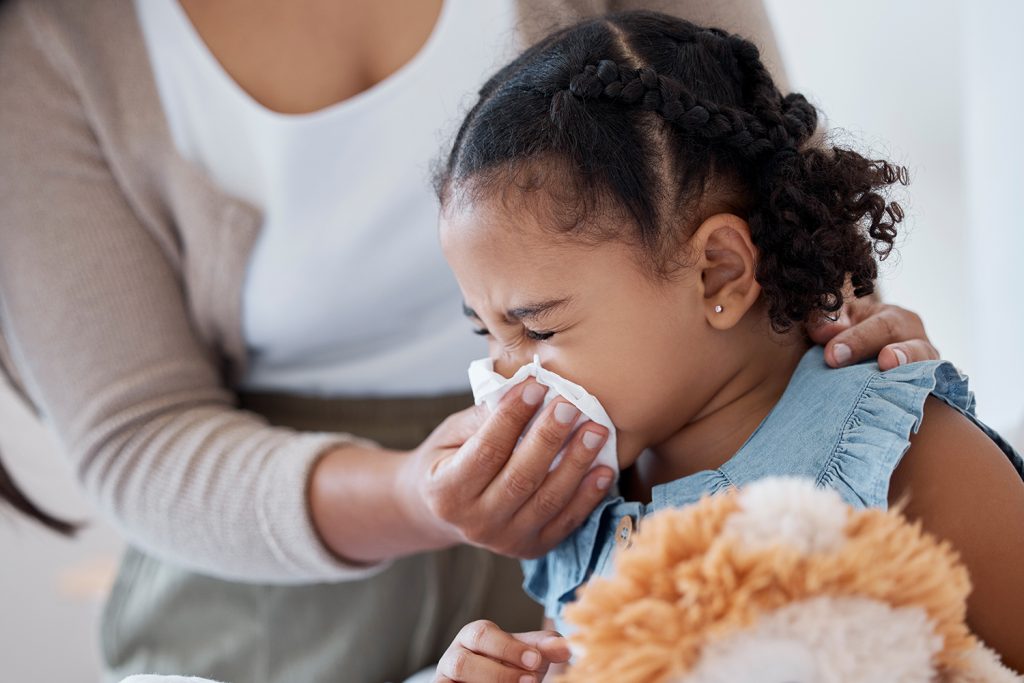 All children will get sick at some point. Viruses like colds and flu are part of childhood. But research shows that kids in daycare get sick more often up to around age 3. According to the American Academy of Pediatrics, it’s normal for young children in daycare settings to have 10 to 12 respiratory infections per year. This is mainly because the environment brings regular close contact with other children. Children in group care settings are exposed to more viruses. Meanwhile, their developing immune systems haven’t encountered most of the germs they’re exposed to, so they wind up getting sick.
The good news is that your child’s immune system develops as they grow. When children get sick, their bodies build resistance to those germs through antibodies and immune cells. Getting sick can prevent future illness and help keep them healthy in the elementary school years and beyond. That said, we know it’s stressful when you feel like your child is sick all the time, while friends’ children at home with a parent aren’t catching every single bug. It’s important to avoid comparison and instead focus on how to keep your child as healthy as possible while building her immune system.
How Can I Help My Child Build A Strong Immune System For Daycare?
The benefit of getting exposed to germs in the preschool years is building a strong immune system down the road. However, there are several steps you can take to keep your child as healthy as possible in daycare.
- Keep your child up-to-date on vaccines. Childhood immunizations won’t keep your child from catching a cold at daycare, but they will prevent the most severe childhood illnesses.
- Emphasize a healthy diet to help your child get vitamins naturally. Talk with your pediatrician about supplements for picky eaters.
- Make sure your child stays hydrated and drinks mostly water.
- Encourage physical activity and spending time outside.
- Healthy sleep patterns are one of the most essential factors for healthy immune function. Keep bedtime routines firm and create rituals that help your child sleep well.
- Hygiene habits, especially handwashing, prevent the spread of germs. Model handwashing and make sure your daycare provider follows guidelines. Children should wash their hands before and after eating, and after touching high-contact surfaces and toys.
- Keep your child home from daycare when they’re sick. A slight cough or a runny nose is usually par for the course. But if they have a fever or signs of a more severe illness, such as vomiting or diarrhea, a rash, or mouth sores, keep them home. Missing daycare can be hard on working parents, but it’s an exercise in community care that will pay off in the long run.
Should I Be Worried If My Child Gets Frequent Colds And Viruses?
The constant battle with colds and other viruses can be stressful and concerning for parents. It can be hard to ride out the viral merry-go-round that the winter months can bring. However, if your child recovers well and feels good in between bouts of illness, there’s usually nothing to worry about. Be sure to keep the lines of communication open with your pediatrician, and make an appointment if your child has a high or prolonged fever or symptoms of a secondary infection, such as pneumonia. You should also see your pediatrician if your child has recurring ear or sinus infections. At Loudoun Pediatric Associates, we understand how challenging this can be for children and families. Wash hands, eat plenty of fruits and veggies–and call us whenever we can help.